Wednesday, 31 January 2018

NEXT-GEN Nescot week 11 - Animation (SCP Special by 'Lord Bung')

(Disclaimer: this blog post is to review an animation that I enjoy, therefore none of the images are my own designs and I encourage you to go see the original artist. Also the song shown in the video is 'In the Pines' by Danny Farrant.)

Animation used:
Confinement Special - In the Pines (an SCP Animation) - https://www.youtube.com/watch?v=l0Md9qwWQBI

SCP-217 (http://www.scp-wiki.net/scp-217)
This animation is made by the youtuber "Lord Bung" who specialises in creating animations with one of their series being about the "SCP Foundation." The SCP Foundation is a fake government website that is considerd a wiki page with an insane amount of mythical, dangerous and rather weird monsters. Therefore the animaions of this website are often horror based.
This episode in particuar is a special episode, detailing many of the different SCPs on the website, such as SCP-217 as seen on the left. They do this while, at the same time, acting in beat with the song ('In the Pines') in the background.
SCP-079 (http://www.scp-wiki.net/scp-079)

The large amount of short animations in this episode are all incredibly detailed, weird and dark in their design and imagery. It is set up in the minor introduction to the episode before showing a total of 28 SCPs throughout the video. Using fluid and smooth animation, it portrays a sense of realism and movement which makes the viewer feel imersed within the scenes. This adds to the horror filled atmosphere and giving a growing curiosity towards what the backstories are to the SCPs. This encourages the viewer to read from the SCP wiki themselves.

SCP-3560 (http://www.scp-wiki.net/scp-3560)
As the video progresses it slowly gets more weird and sinister to draw the viewer in, while simultaniously staying true to the original sources of the SCPs within the video. They do this by shortly showing imagery that is detailed or hinted towards by the SCP wiki. Also because of the afore mentioned encouragment to read the SCP wiki and the increasing intrigue as the animation progresses, the creator of the animation left links to the original sources in the description of their video.
Just like the creator of the animation, I too encourage you to check out the Scp Wiki (http://www.scp-wiki.net/) as they have many interesting creatures and written (fake) events.

Friday, 26 January 2018

NEXT-GEN Nescot week 10-11 - history of video-games and video-game consoles

The history of video-games and consoles dates back to the early 1950's when computer scientists began designing ideas for simple games and simulations within their research. During this time, a scientist by the name of Ralph H. Baer had the idea of a home video-game in 1951, this lead to the creation of the first video-game in October 1958, the game was created as a simple tennis game similar to the popular 1972 game "Pong".

The following link is a video of the game being played (https://www.youtube.com/watch?v=WY5jdf7Popk)
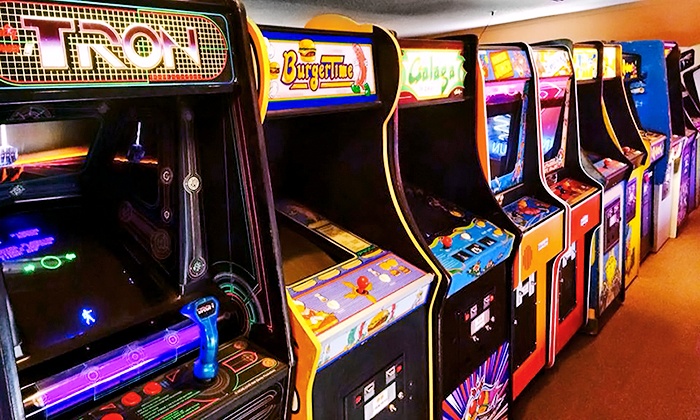
Image result for arcade
Because of this success, in the late 1950's Baer, while working for Sanders Associates, created a series of video-game console designs, however these console designs wouldn't fully be created until the early 1970's (with the first being released in 1972). After this point, the first video-games (arcade games) began appearing in the 1960's and were played on massive computers connected to vector displays (arcade machines) instead of analog televisions.

Also, during 1972 "Sonar" was created and is regarded to be the first 3.D game ever made. They did this by having a model inside the arcade machine and using the Pepper's Ghost illusion to make it appear as if the submarines in the game were in the middle of the model. Pepper's Ghost is an illusion Technic used primarily in theaters and other forms of media. It is named after John Henry Pepper who popularized the effect in 1862.

The following link is to the wiki page for Pepper's Ghost for more information.
(https://en.wikipedia.org/wiki/Pepper%27s_ghost)

Then in 1972, the first video-game console was released called the "Magnavox Odyssey²" and sold roughly 2,000,000 units worldwide. This then started the first generation of video-game consoles and the 1970's were known as the golden age of video-games and arcade games.
This was followed up by, in 1979, the first R.G.B (red-green-blue pix-elated) video-game being created called "Galaxian". Not only that but, once "Galaxian" had been created, more and more games began using R.G.B colour, leading to the creation and large usage of colour consoles.

The consoles sold during this time include, but are not limited to: the "Intellivisoin" (roughly 3,000,000 units sold), the "ColecoVision" (roughly 2,000,000 units sold) and the "Atari 2600" which was released in 1977 in the US, 1978 in Europe and 1983 in Japan.
The "Atari 2600" dominated the market by selling roughly 30,000,000 units worldwide and subsequently may have caused the infamous video-game crash of the 1980's (1983-1985).
The video-game crash of the 1980's (or the Atari shock in Japan) was a large-scale recession in the video-game industry due to market saturation.

However, leading up to 1989 this video-game crash slowly dissipated with the release of the first hand held gaming consoles, starting with the "Game Boy" in 1989 selling roughly 118,690,000 units sold, it was closely followed up by the "Atari Lynx" in 1990 (3,000,000 units sold), "Game gear" in 1991 (10,620,000 units sold) and "TurboExpress"in 1991 (1,500,000 units sold).

After this the video-game industry boomed with the creation of new genres such as the newly made "interactive movies", "MMO.RPG games" and "role-playing games" in the 1990's. This was further backed up by, in 1992, the release of (Sega's) "Virtual Racing" (which was one of the first fully 3D games) and the increasingly prominent appearance of super hero characters in games.

The release of new revolutionary consoles such as the "Dreamcast" in 1998 (roughly 9,130,000 units sold), "PlayStation2" in 2000 (roughly 155,000,000 units sold), "GameCube" in 2001 (roughly 21,740,000 units sold) and the "Xbox" in 2002 (roughly 24,000,000 units sold) also helped improve the video-game industry in a substantial way. Currently, up until 2018 the "PlayStation2" is still the most sold console ever made, closely followed by the hand held console the "Nintendo DS" at 154,020,000 units sold.

Finally came the release of a new league of consoles, redefining how we perceive video-games and graphics. These consoles include but are not limited to: the "Xbox-one" (roughly 34,000,000 units sold), "PlayStation 4" (roughly 70,600,000 units sold) and "Nintendo Switch" (about 10,000,000 units sold) which are not only are the most recent (to this post '2018') consoles to be released but they have opened a whole knew world of opportunities for the future and I personally cannot wait to see what comes next.

Friday, 19 January 2018

NEXT-GEN Nescot week 10 - SWOT analysis

SWOT

Toby Roberts

Freelancing:

Strengths:

1.Choose when you work (Flexible hours).
2.Control over jobs and clients.
3.Choose where you work.
4.Choose what you work on.
5.You keep all your earned profits.

Weaknesses:

1.No guarantee of work or money.
2.Potentially make less money.
3.Few employment rights and no workplace pension.
4.Isolation.
5.Harder distinguishing between work and personal time.

Opportunities

1.Variety of projects

Threats

1.Negotiation of contracts
2.Other freelancers that are better than you or cost less money

Self-employed:

Strengths:

1.Choose when you work (Flexible hours).
2,Choose where you work.
3.Choose what you work on.
4.Potentially make more money.

Weaknesses:

1.No guarantee of work or money.
2.Potentially make less money.
3.Few employment rights and no workplace pension.
4.Isolation.

Opportunities

1.Variety of projects

Threats

1.Negotiation of contracts

Short term employed contract:

Strengths:

1.You have the chance to become a full time employee depending on if you impress your employer(s).
2.Your most important part in your contract is what you produce to your employer so you may end up not needing to get involved with workplace politics.
3.As you are paid as a “contractor” instead of regular staff, you may be able to deduct a portion of your work related expenses that normal staff wouldn’t qualify for.
4.You can sample a number of employers by taking multiple contracts in a variety of industries.

Weaknesses:

1.You may not be offered entitlements such as vacation pay, benefits, training allowances and pension contributions made by the employer.
2.There will be no severance pay offered to you at the end of your contract (unless you negotiated a provision for this in your terms of employment).
3.You will be paid as a contractor and your employer will not deduct for taxes. So you must make sure to remit your taxes to the government on your own.
4.Other employees may not converse as much with you (share as much information or invite you to their inner circle) because they know you are only working there for a specific amount of time.

Opportunities

1.Variety of projects

Threats

1.Other employees being better at your job than you.

Full time employed contract:

Strengths:

1.Fixed salary
2.Sanctioned leaves
3.Working schedule
4.Career growth
5.Job perks

Weaknesses:

1.Stagnant work
2.No time to ‘find your thing’
3.Job hunting is difficult
4.Versatility missing in your Resume

Opportunities

1.The ability to be promoted to higher tear jobs with more pay.

Threats

1.Over reliance on the company

Wednesday, 17 January 2018

NEXT-GEN Nescot week 10 - Job roles

In my future within the video-game development and V.F.X industries, the three jobs I would prefer to have would be: a games programmer or 2.D/3.D artist or concept artist. However out of these jobs the ones I would most want to become would be a games programmer.

For the role of a video-game programmer, I believe I have the skills, knowledge and imaginative spirit required to become a valuable employee.
The skills that are needed for this role include:

1. The ability to program in C++ (also known as C# or "C-sharp), C and other forms of programming languages.
2. The capability to work alone and with others.
3. A systematic and organised lifestyle.
4. Valid communication skills.
5. Platform experience (different types of consoles/computers).
6. An understanding of game-play.
7. To be able to take instructions and work to deadlines accordingly.
8. To be creative, imaginative and contain problem-solving skills.
9. And finally to hold the knowledge of relevant health and safety legislation and procedures.

In order to secure my placement with this job, I will seek out video-game development companies with open placements and give in my CV or attend interviews at ether Indie game companies or Triple A companies.

Hopefully, after getting a job at a desired position I will be determined to learn the software that the company uses, as well as improve my position further by working hard and following instructions given by my employers.

NEXT-GEN Nescot week 10 - Cyber security

Cyber security is the protection of computer systems from internal theft of, or damage to, their hardware or software information, as well as disruption or misdirection of the services they provide. Cyber security can control physical access to the hardware, as well as protecting it against harm that may come via network access, data and code injection.
Also due to malpractice by operators (intentional or accidental) IT security is susceptible to being tricked into deviating from secure procedures through various methods.

Cyber security is of growing importance in computer systems because of  growth in the area of the internet, wireless networks (WiFi) and smart devices.
There are many types of viruses and sets of malicious software.
The types of viruses include:

1. Boot Sector Viruses
This virus could appear on the "Master Boot Record"  but due to the evolution of the internet these viruses are now much more obsolete than they were when floppy disks were used to boot a computer and are now much rarer.

2. Web Scripting Viruses
These viruses breach your computer through your web browser security, allowing the hacker to leave client-side scripting into the web page, bypassing access controls and stealing your information from your browser. This is a problem on many sites such as social media sites.

3. Browser Hijackers
These viruses are when your web browser is automatically sent to a particular website and is the most common way Ransom-ware hijacks your browser. While it may look threatening it can be easily be countered by closing the tab that it has opened on without touching anything on the website as this tactic is mainly used to increase income for the hacker(s) via web ads.

Image result for security breach
Image reference (13/01/2018):
https://www.techinside.com/abd-kredi-kurulusundan-143-milyon-kisinin-verisi-calindi/
4. Resident Viruses
This virus inserts itself into the memory of your computer and can then do multiple actions. One of its more dangerous features is its ability to leave the originally infected file and it can run on its own.

5. Direct Action Viruses
This virus only starts when you have activated an infected file, the load is added to your computer and the virus becomes active but this virus takes no action unless the file is implemented again or activated again by the user.

6. Polymorphic Viruses
This virus has the ability to evade antiviruses because the antivirus programs detect the presence of any virus by detecting its code. The virus changes its code every-time the infected file is activated. This makes it nearly impossible for any antivirus to track it down.

7. File Infection Viruses
These viruses, contrary to the name, do not always attack or use the help of files. Although, the starting point of the file infector is mimicking a file and re-writing the file (code).

8. Multipartite Viruses
These viruses use both methods of infecting your computer depending on the software you use or the files that exist on your computer. The methods they use to get onto your computer include sending a file or "payload" to your computer or they attack through your internet browser.

9. Micro Viruses
This virus appears in the form of a word document through a dodgy email which seemingly links the user to pornographic websites while actually sending them to malicious websites. The most known micro virus is called "Melissa" and not only do these viruses send you them through email but also it uses your contact list to send copies to those who are in contact with you.


Image result for malware
Image reference (15/01/2018):
 https://thehackernews.com/2014/06/new-banking-malware-with-network.html
Sets of malicious software include:

1. Spyware
A software that gathers the users information without their knowledge and may send that information to another entity without the user's consent and could also take control over the device without the users knowledge.

2. Malware 
Malware (short for malicious software) comes in many different forms such as: Adware, Bot software, Bug software, Rootkit software, Trojan Horse software, Worm Software and Spam. Malware can also be made of executable code, scripts, active content and other software. Malware is shown by its malicious intent, acting against the computer user and causes intentional harm rather than an unintentional harm due to a deficiency.

3. Ransom-ware
A type of malicious software that threatens to publish victims data and block access or destroy data if a ransom isn't paid. A few forms of ransom-ware are easily reversed with the technical knowledge to do so, some are much more advanced. The more advanced ransom-ware are known for encrypting files so that they are inaccessible and demanding payment to decrypt them.


4. Viruses
A type of malicious software that replicates itself by modifying other computer programs and inserting its code. the infected computer programs can include data files or the 'boot' sector of a hard drive.

While there are many types of viruses, they are still stoppable with the use of Anti-Virus software or hardware, these programs are designed to detect and destroy any malicious software or viruses that are hidden on your computer.

Alongside protection against malicious programs, cyber security also can be used to show censorship and age ratings in order to protect children on the internet.

This can be done in multiple ways. For example:

1. Child lock systems
Child lock systems allow Parental Controls to let parents set controls for their children's computer, e.g: blocking them from 18+ sites and disallowing them to see things that the parents do not want them to see.

2. Age rating systems
A classification set to websites and products specifying a minimum age for a person using it. for example: a shooting game has a rating of 18+ while a puzzle game has the rating of 3+.

These ways of censoring content allow the protection of children from finding inappropriate or harmful content on the internet.

Thursday, 11 January 2018

NEXT-GEN Nescot week 9 - Final Design Exploratory vehicle (space-ship)


 For week 9 and the winter holidays we were tasked with creating an exploratory vehicle that we could choose to create ourselves or work off of an existing design.
For my design I decided to create it from scratch rather than copy a design because I wanted to show that I am good at creating concepts and ideas. This then led me to create three prototype designs and choose out of the three designs which one appeared to have the most potential.

Out of these three, I chose the one on the left because I believed that I could improve it the most. After picking the one to continue using, I began adding small details to the object; such as: jets on the wings and back of the spaceship or the pipes at the back of the ship and the cylinders at the start of the ship. These additions helped make the ship look more detailed compared to it's current form.

Next, I began texturing (UV-mapping) the ship using Blin and Lambert values starting with the metallic areas of the ship (the wings, body and helm) before then adding the fire textures and blue-painted metal textures and finally adding the glass textures.

Finally, I began editing the UV-mapping of the textures so that one side of the ship was lighter or darker than the other giving the illusion of light. I fixed any errors with the textures being stretched in order to give the appearance of the ship a less stretched look.

Overall I believe that I did well in my design, however I believe I could have done better by getting more textures that showed little details, instead of adding them onto the mesh itself.


Saturday, 16 December 2017

NEXT-GEN Nescot week 9 - Fidget spinner (Maya)


During week nine we were tasked with creating a fidget spinner by modeling it in MAYA. For my fidget spinner, I began creating a quarantine symbol and adding a ball bearing in the middle and a ring to show the quarantine symbol.
After doing this, I copy and pasted each side to be identical before texturing the first layer of the design and I decided to add blunt blades to the corners of each side.

Once I had textured the sides, I textured the ball bearing with the quarantine symbol I used for inspiration and I re-added the sides by pasting them and making them smaller to look like an inner curve to the outer curve, I textured these red.
Next I textured the blades to look silver and added an extra layer to the inner circle by using the same tactic as the sides.


Afterwards, I added a texture to the circle surrounding the ball bearing and small bearings (spheres) connecting them together.
Finally, I added rings around the outer cylinders (weights) and textured them with silver. Then I used the Boolean "difference" to create holes in the fidget spinner to give it a more clean look.

Overall I believe I did well, however, if I could go back and change anything I would have added an animation to the fidget spinner so that it would spin.

Thursday, 7 December 2017

Character design draft / ideas : (Toxic Jungle) week 9

During week nine we were tasked with creating a toxic jungle scene. While I have not completed the entire scene, I have begun by creating drafts and ideas for possible elements used within the final adaptation of the toxic jungle in a post apocalyptic manner.


For this image I used a "WAC-OM tablet" during the creation of it. I started by creating an outline of a person. After doing this I began sketching an opposite facing side of the same person. After doing this, I started drawing around the two drawings to show possible ways of creating the characters appearance. Doing this helped me to pick the best appearing drawings to add to the character's face and body, for example I added a hood instead of a bandanna, and I made a scar across the cheek of the character's face.

Overall I believe that this drawing is very good and I will be using the character in my final design (as a background character).

NEXT-GEN Nescot Year 4 HND - Going Indie (Final game, itch.io Link)

For the final part of my Game Development project (Topdown Shooter), I was required to upload my finished game to Itch.io, allowing my game ...